
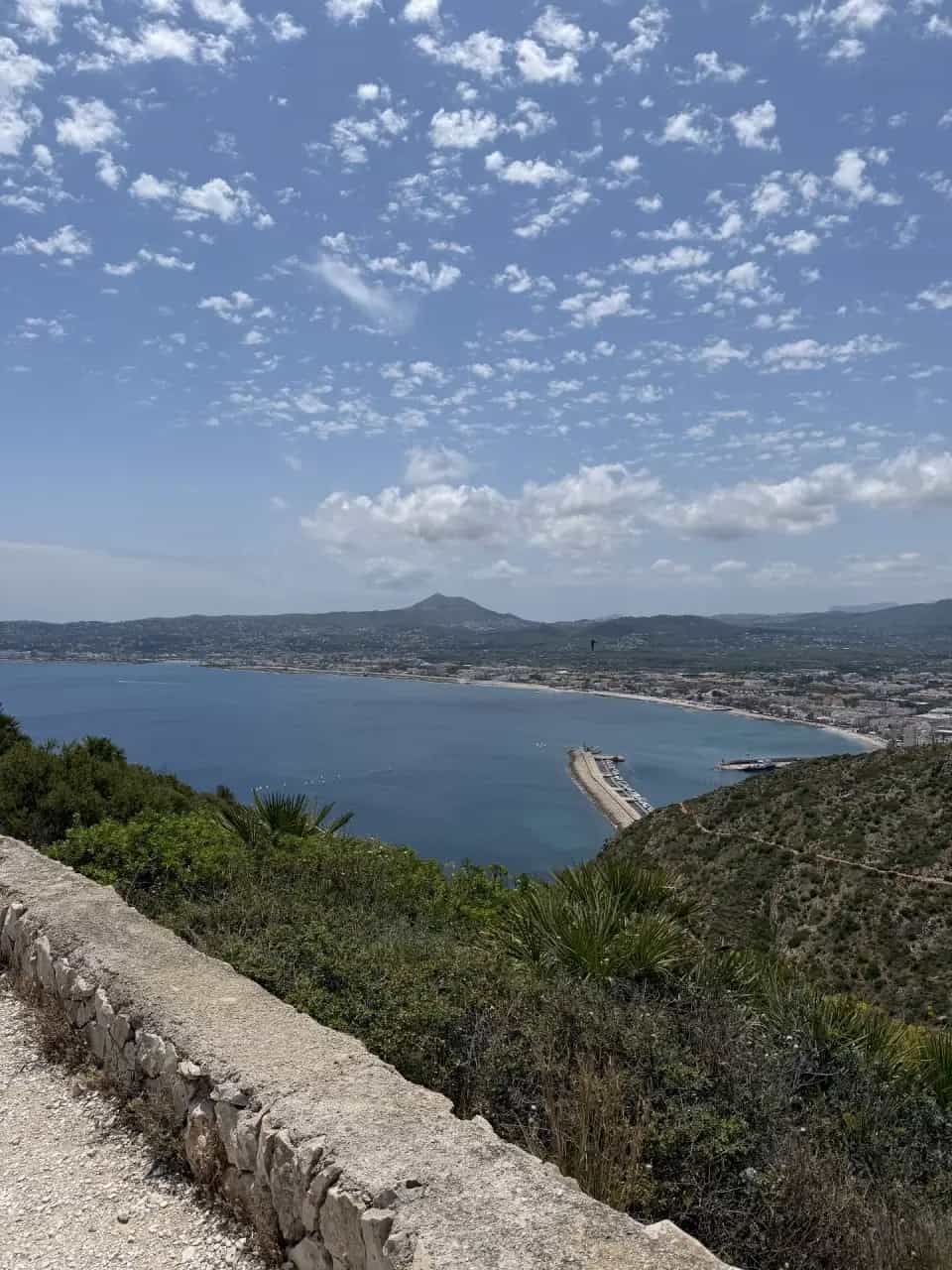
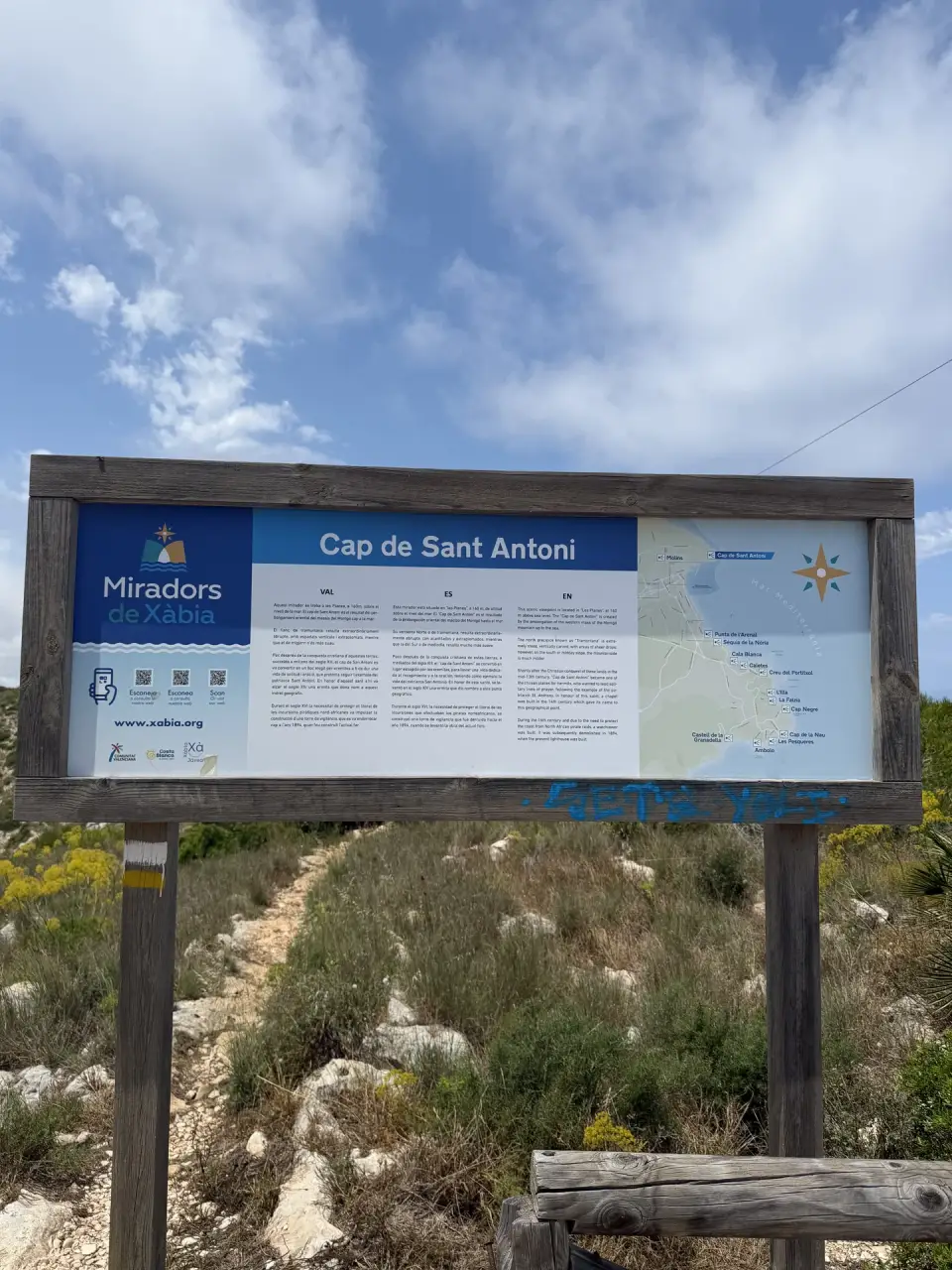
Cap de Sant Antoni
Geological giant of 160 meters falling vertically into one of the richest marine reserves in the Mediterranean, next to the lighthouse.
Route Tips
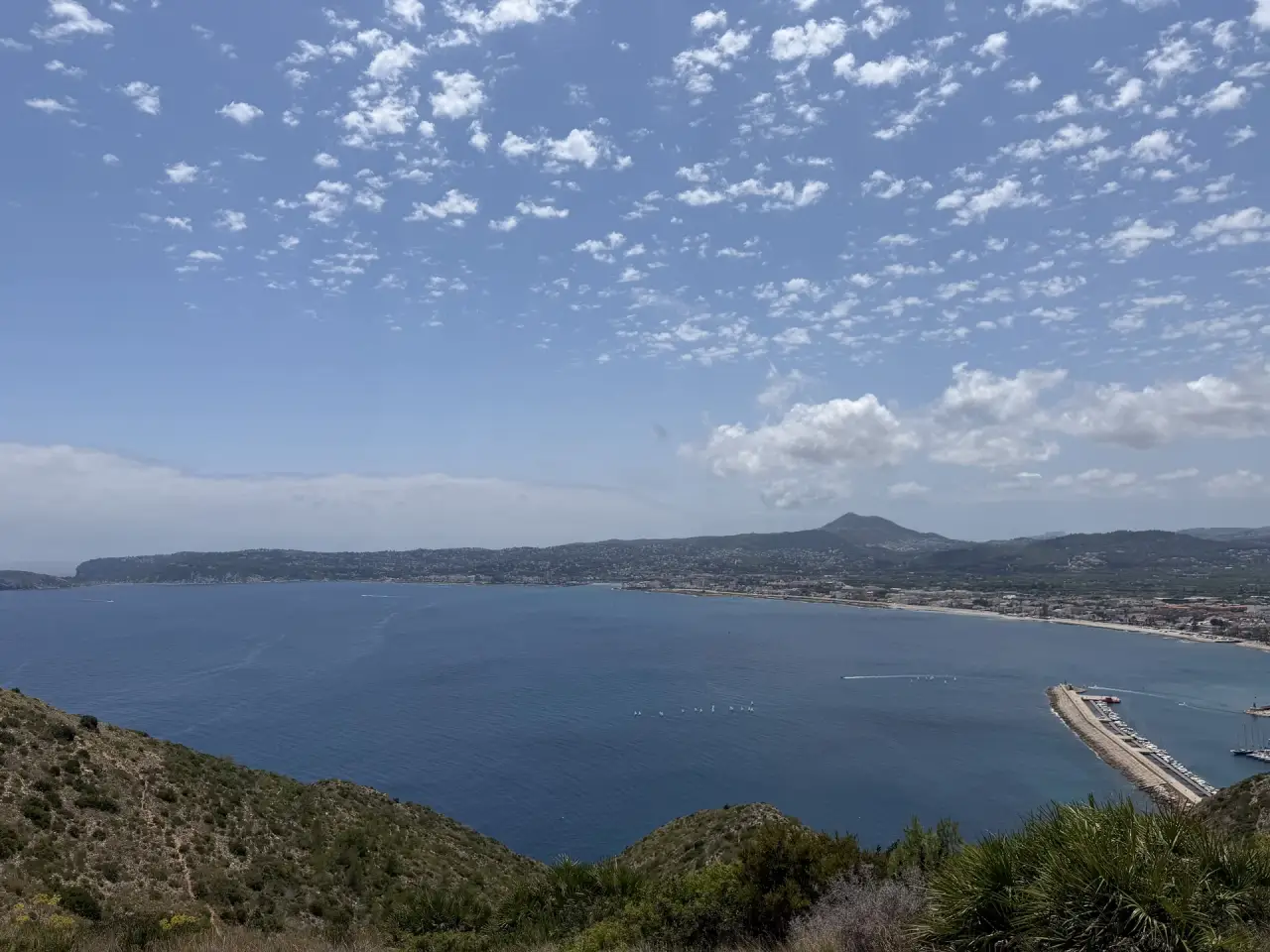
On clear days you can see the silhouette of Ibiza. To the north, the Gulf of Valencia reaching the Sierra de Irta in Castellón.
We are standing before a geological giant: a 160-meter-high cliff that drops vertically into one of the richest marine reserves in the Mediterranean. The viewpoint is located next to the lighthouse of the same name. Historically, this cape has been a vital watch point against Berber pirate attacks, and today it is a sanctuary for species such as the osprey and the peregrine falcon. It is, literally, where the land ends and the infinite blue begins. The most impressive feature of this viewpoint is its visual reach. On clear days, the silhouette of the island of Ibiza is sharply outlined on the horizon. To the north, the view disappears into the Gulf of Valencia, reaching as far as the Sierra de Irta mountains in Castellón if the atmosphere is clean. It is very easy to access by car and has a large parking lot, making it the number one mandatory stop on any route through Jávea.
Transport
Although some sections can be done on foot, it's best to travel by car or motorcycle as the complete route covers about 20 km.
Best Time
Sunrise at Cape San Antonio and sunset at Punta del Arenal are the most powerful experiences.
Equipment
Bring water, comfortable shoes (some viewpoints have dirt paths) and good binoculars to see the islands and boats.